Thinking about adding an accessory dwelling unit to your Sloan’s Lake property? Whether you want a rental, a guest suite, or a flexible workspace, an ADU can unlock new options and long‑term value. The challenge is knowing what is allowed on your lot, how much it might cost, and what the potential return could look like. In this guide, you’ll learn the Denver rules that most often apply in Sloan’s Lake, a clear permit and build timeline, realistic cost ranges, and a simple ROI framework you can put to work. Let’s dive in.
ADU basics in Sloan’s Lake
Sloan’s Lake, often searched as “Sloan Lake,” is an established Denver neighborhood where many lots can support an ADU if zoning allows. In Denver, ADUs include interior conversions, attached additions, and detached new structures. Your exact allowances and size limits depend on your parcel’s zoning district and any overlays.
Before you sketch a plan, verify your lot’s rules and any special reviews. That single step can save weeks in design and thousands in revisions.
Zoning and rules to check
Verify zoning and overlays
- Start with the City’s interactive zoning map to confirm your base zone, overlays, and lot dimensions. Use Denver’s interactive zoning map viewer.
- Review city guidance for ADUs and permitting. Begin on the City and County of Denver site and search for “Accessory Dwelling Units.”
- If you prefer a resource hub, browse Denver Planning and Zoning resources for links to code sections and process steps.
Size, setbacks, and parking
- ADU size limits, setbacks, and lot coverage vary by zone. Some districts cap ADU size as a percentage of the main house or with a fixed maximum square footage.
- Detached units must meet rear and side yard setbacks. Many lots in Sloan’s Lake are narrow, so siting a detached unit can be tight.
- Parking rules vary. Some zones waive extra parking for ADUs, while others require an off‑street space. Verify early so you can design access and layout correctly.
Rentals and STR licensing
- ADUs can generally be rented long term. Short‑term rentals have separate rules and licensing. If you are considering a vacation‑style rental, check Denver short‑term rental licensing before assuming it is allowed.
- If your property is in an HOA or has recorded covenants, review those documents. Private rules can prohibit ADUs even when the city allows them.
Historic and utility checks
- Historic or landmark properties can require design review and specific materials or massing. Confirm whether any historic or landmark review applies to your parcel.
- ADUs often need new or upsized utility connections. Plan for sewer capacity checks, water service sizing, and potential stormwater measures.
Permits and timeline
Nine key steps
- Preliminary check: confirm zoning and overlays using the map viewer, then speak with a planner at Community Planning and Development if needed.
- Site survey: order a boundary and existing conditions survey.
- Schematic design: engage an architect or designer and begin plans.
- Pre‑application meeting: recommended if you have overlays or a detached ADU.
- Building permit submission: submit architectural, structural, energy, and MEP plans.
- Plan review and corrections: respond to zoning, building, fire, and utility comments.
- Permit issuance: pay fees and receive your permit.
- Construction and inspections: foundation, framing, rough‑ins, insulation, and finals.
- Certificate of Occupancy or final approval.
How long it takes
- Planning and design: roughly 4 to 12 weeks.
- Plan review and permit issuance: roughly 4 to 12 weeks, longer if historic review or complex utilities are involved.
- Construction: about 3 to 9 months, with detached ADUs on the longer end.
- Total timeline: many Sloan’s Lake projects run 6 to 15 months from decision to occupancy.
Fees and inspections
- Expect building permit and plan review fees, plus utility tap or inspection fees based on scope and valuation.
- Inspections follow standard sequences: foundation, framing, mechanical/plumbing/electrical rough, insulation, and final.
Avoidable delays
- Designs that miss setback, height, or lot coverage rules.
- Incomplete sewer information or required lateral upgrades.
- Unplanned parking or access constraints.
- Conflicts with covenants or HOA rules discovered late.
ADU types and cost ranges
Interior conversions
- Converting a basement or existing garage is often the most cost‑effective option.
- A small, basic conversion can land in the low tens of thousands, running up to around $100,000 or more depending on scope and code requirements.
Attached ADU additions
- Adding an attached suite of roughly 500 to 900 square feet typically ranges from about $150,000 to $350,000 or more, based on finishes and systems.
Detached ADUs
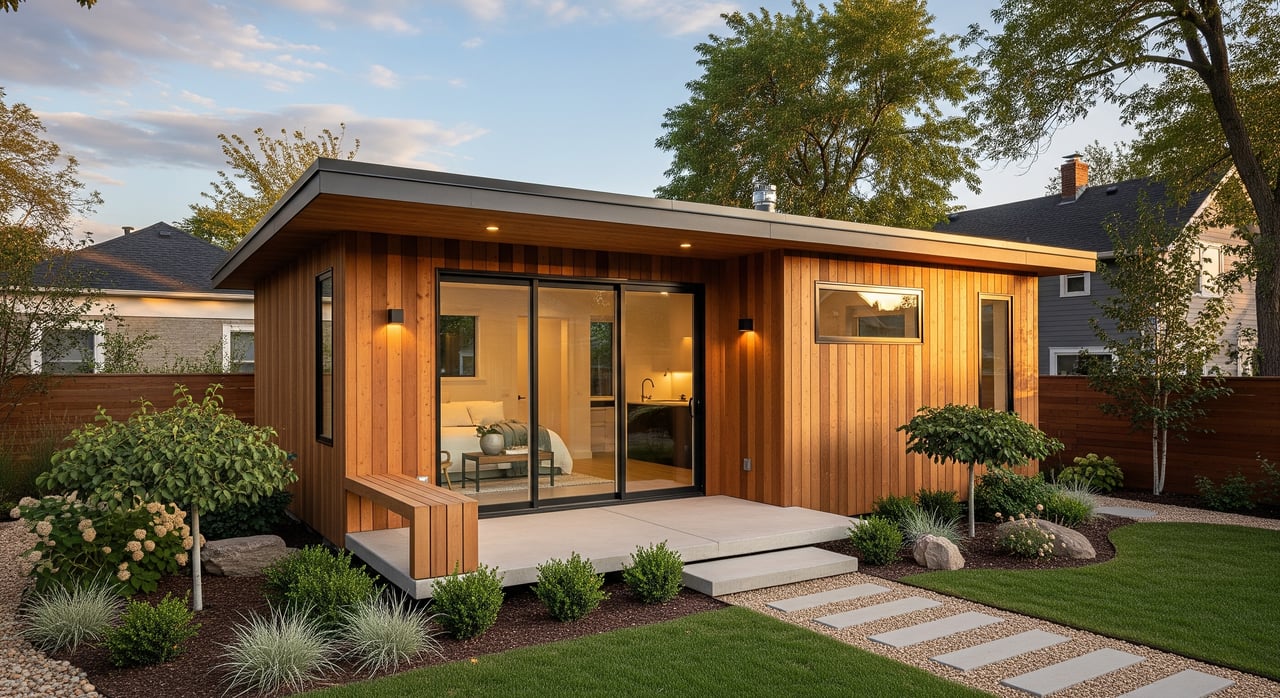
- A new detached unit of about 400 to 900 square feet commonly ranges from roughly $150,000 to $400,000 or more.
- Costs swing with foundations, utilities, access, and site work. Narrow lots and alley access common in Sloan’s Lake can add labor and coordination.
What drives cost
- Type and size: interior conversions cost less per unit; new detached units cost more due to foundations, roofing, and full systems.
- Utilities: running new sewer, water, gas, and electric to a detached unit is a major line item.
- Site constraints: tight access, grade changes, and drainage work increase cost.
- Systems and finishes: kitchen and bath quality, HVAC choices, and energy upgrades matter.
- Code and energy compliance: energy code and accessibility items can add time and expense.
- Soft costs: add architectural and engineering (often 5 to 12 percent), permit fees, utility taps, and a 10 to 20 percent contingency.
Pro tip: get two to three local bids with clear line items for site work, foundation, utilities, interiors, and contingency. Confirm whether bids include meters, sewer taps, and permit fees.
ROI framework that works
You can model ADU performance with a few inputs and simple formulas. The key is to use local numbers for rent, expenses, and financing.
Your key inputs
- Total project cost, including soft costs and contingency.
- Financing terms: loan‑to‑value, interest rate, amortization, and cash invested.
- Expected monthly rent based on current local listings.
- Vacancy and collection loss: a common starting point is 5 to 10 percent.
- Operating expenses: taxes, insurance, utilities you pay, maintenance, and management if used.
- Property tax impact: improvements can increase assessed value. Contact the Denver Assessor for guidance.
- Short‑term rental option: if legal for your parcel, STRs may increase gross revenue but add licensing, taxes, fees, and variability. Confirm rules first.
Quick example
Assume these illustrative numbers for a one‑bed ADU:
- Total build cost: $220,000
- Expected rent: $1,800 per month
- Vacancy: 8 percent
- Operating expenses: 35 percent of gross rent
- Financing: 80 percent loan‑to‑value with a 30‑year amortization
Now the math:
- Annual gross rent: $1,800 × 12 = $21,600
- Effective rent after vacancy: $21,600 × 0.92 = $19,872
- Operating expenses: about $7,560
- Net Operating Income (NOI): $19,872 − $7,560 = $12,312
- Cap rate on total cost: $12,312 ÷ $220,000 ≈ 5.6 percent
Cash flow depends on your actual debt service. Compare your cash‑on‑cash return to other uses of capital and consider the non‑financial benefits of added space and long‑term flexibility.
Make sense of results
- Interior conversions often yield stronger near‑term returns because cost per rentable square foot is lower.
- Detached ADUs can boost long‑term property value and future flexibility but require higher upfront cash.
- Run a conservative case with lower rent and higher expenses, plus an optimistic case. This gives you a realistic band for decision‑making.
Sloan’s Lake tips and next steps
Parking and neighborhood fit
Sloan’s Lake blocks have variable lot widths and alley access. Confirm parking requirements for your zone and plan a layout that maintains reasonable access for both the main home and the ADU. Good neighbor communication and thoughtful design help projects move smoothly.
Design for flexibility
If you may host family or work from home in the future, plan entries, storage, and sound control with dual use in mind. Flexible layouts can improve resale appeal and reduce future renovation needs.
Choose the right team
Select an architect and builder with Denver ADU experience. Ask for recent Denver ADU references and confirm they understand local plan review, energy compliance, and utility coordination. A pre‑application chat with a city planner can surface issues early.
Your seven‑step checklist
- Pull your parcel’s zoning and overlays in the zoning map viewer.
- Contact Community Planning and Development or schedule a pre‑application meeting to confirm ADU allowances for your lot.
- Check HOA covenants and any historic designation.
- Order a site survey and request preliminary scopes from an architect or contractor.
- Research comparable ADU rents in Sloan’s Lake and nearby neighborhoods.
- Speak with the Denver Assessor’s office about possible assessment changes after improvements.
- Gather two to three contractor bids and build a pro forma using the ROI steps above.
Let’s plan your ADU
If you are weighing cost, timeline, rent potential, or resale impact, you do not have to navigate it alone. With deep Denver roots and construction‑savvy guidance, we help you confirm zoning, pressure‑test costs, and align design with your goals before you spend on plans. Ready for a focused, local perspective on your Sloan’s Lake property? Connect with Kayla Schmitz for a consult tailored to your lot and timeline.
FAQs
Are ADUs allowed in Sloan’s Lake, Denver?
- Many residential parcels in Sloan’s Lake can support an ADU, but allowances depend on your specific zoning district and any overlays; verify using the interactive zoning map viewer.
How do I confirm my property’s ADU rules?
- Start with the zoning map viewer and then review city guidance via Denver Planning and Zoning resources; when in doubt, call a city planner.
What do ADUs typically cost in Denver?
- Interior conversions can start in the low tens of thousands and reach around $100,000+, attached additions often run about $150,000 to $350,000+, and detached ADUs commonly range from roughly $150,000 to $400,000+ depending on scope and site.
How long does an ADU project take?
- Many projects take 6 to 15 months from decision to occupancy, including 4 to 12 weeks for design, 4 to 12 weeks for permits, and 3 to 9 months for construction.
Can I short‑term rent my ADU in Denver?
- Short‑term rentals require a specific license and have city rules; confirm current requirements through Denver short‑term rental licensing before pursuing an STR strategy.
What should I budget beyond construction?
- Include design and engineering, permit and plan review fees, utility taps or lateral upgrades, and a 10 to 20 percent contingency for surprises, plus potential property tax changes after completion.